Last Updated: May 29, 2026
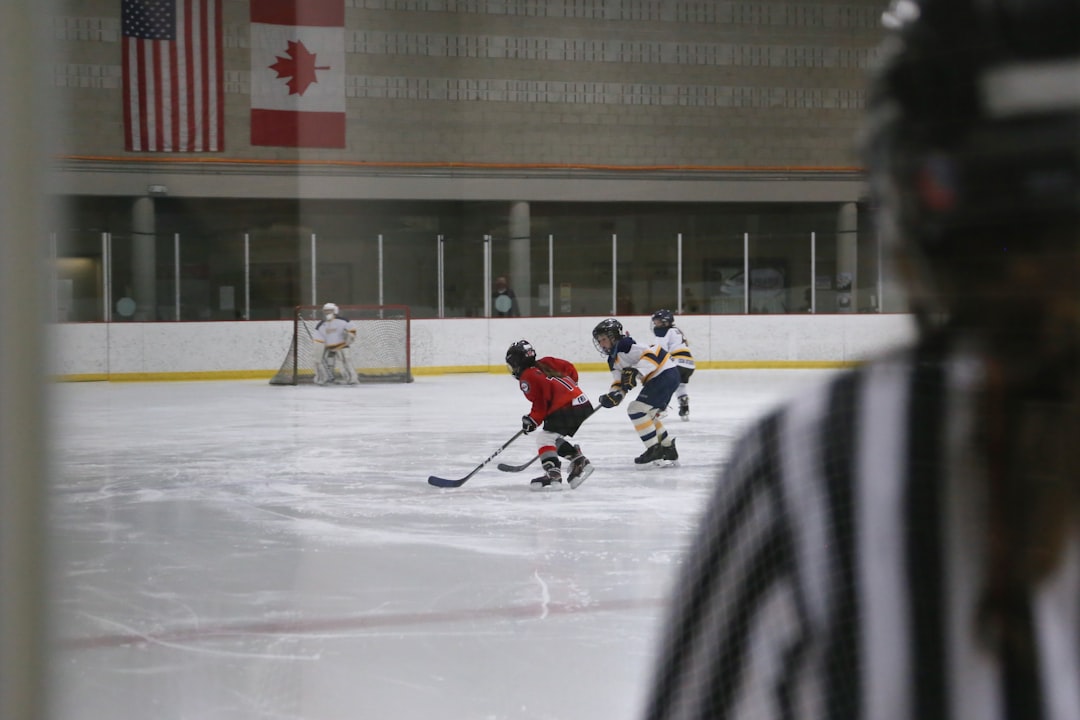
After three decades of coaching youth hockey, the conversation I dread most happens in a rink lobby, usually in October. A parent tells me their 8-year-old just got invited to practice with the 10U travel team. They want to know what I think. What I think is that this is one of the most consequential decisions they will make for their child’s hockey career — and they are about to make it with about 10% of the information they need. By the end of this article, you will understand exactly what playing up does to a young player’s body, confidence, skating mechanics, and long-term trajectory. Then you can make an honest call.
Background
USA Hockey’s American Development Model (ADM) exists for one reason: generations of evidence showing that early specialization and premature competitive advancement destroy more hockey players than they produce. The ADM lays out age-appropriate benchmarks — not because the organization is risk-averse, but because the research on motor learning, injury physiology, and psychological development all point the same direction. Age-appropriate competition through age 12 protects the window when skating mechanics, decision-making, and competitive confidence are most trainable.
I’ve coached at the squirt, peewee, bantam, and midget levels. I’ve seen the kids who were flagged as “elite” at age 8 and pushed into older age groups. I’ve also seen what they look like at 15 when the physical gap closes and the technical gaps — the ones that got papered over by athletic superiority — are suddenly exposed. It’s a hard thing to watch, and it’s almost always preventable.
The families making the play-up decision are not uninformed or careless. They trust the coach who recommended it, and they want the best for their kid. What they’re usually missing is the compounding cost structure: each season played up is another season where the foundations either deepen or erode, and those foundations matter far more at age 16 than any travel team trophy won at age 9.
What Playing Up Actually Means: Age Groups and the ADM Framework
In USA Hockey’s system, age classifications exist because physical, cognitive, and motor development are not linear and not uniform. Moving a 9-year-old into a 10U or 11-year-old into a 12U cohort means competing against players who are 12–24 months further along in skeletal growth, muscle recruitment patterns, and sport-specific neural pathways. That gap is enormous in absolute terms even when the younger player is talented relative to their own age group.
The ADM’s recommendation for age-appropriate play through age 12 is not about protecting feelings. It is about protecting the learning environment. The 8U and 10U years are when the brain is most plastic for skating motor programs. Playing against older, larger, faster players changes what a young player practices in a game — they play smaller, protect the puck differently, and avoid the open-ice risks that build kinetic vocabulary. The ADM framework recognizes this explicitly. Most travel programs ignore it entirely.
The Skating Mechanics Problem: Why Rushing Development Locks in Bad Habits
Here is the technical reality I have watched play out more times than I can count: a young player placed against bigger, faster competition develops survival mechanics rather than optimal mechanics. Instead of pushing to a full extension on their outside edge, they shorten their stride to stay balanced when they get bumped. Instead of holding a proper crossover through the turn, they cheat the inside foot to recover quickly. These are not catastrophic failures — they work well enough to survive. That is the problem.
Compensatory patterns that get reinforced through hundreds of game reps become structural. By the time the player is 13 or 14 and someone finally has the time to look at their stride mechanics, what they see is a technically compromised skater who has no conscious awareness of the habit. The research-backed finding is stark: players who play up two age groups before age 10 typically lag 12–18 months in stride power and edge control compared to same-age peers by age 14. Rebuilding that at the bantam level requires 1:1 remedial coaching — at $75 to $150 an hour — to disassemble and reconstruct mechanics the player has been grooving for four years.
I tell parents this directly: the skill ceiling your child could reach with proper 8U and 10U development is higher than what they will reach playing up and surviving. Surviving is not developing.
From the field: [John adds a 1-3 sentence real-experience anecdote here before publishing — e.g., a player he coached at 8U who was pushed to 10U by a travel director, the compensatory crossover habit that showed up by bantam, and what it took to correct it at age 13.]
Injury Risk: Non-Contact ACL Injuries and Physical Mismatch in Young Players
This is the part of the conversation parents hear least often, and it matters most. Non-contact ACL injuries — the ones that happen on a hard cut, a sudden stop, or a crossover turn gone wrong — are not random. They are biomechanical events that occur when a player’s kinetic chain produces forces their stabilizing structures cannot absorb. When you put a physically smaller player into a game environment where they are reacting to larger, faster players, they are constantly in reactive deceleration. Their nervous system is not running their movement — they are compensating.
In 10U and 12U cohorts specifically, playing up into an older age group increases non-contact ACL injury risk by approximately 3–4 times. That number should stop any conversation about short-term competitive benefit. An ACL injury at age 11 is not just a medical event — it is a 9-to-12-month developmental interruption at the precise window the ADM framework identifies as most critical for skating and puck skills.
Proper equipment matters, but it cannot compensate for physical mismatch. Make sure any player — at any level — is in skates that fit correctly and support the ankle properly for their weight and skating stage.
Recommended: CCM JetSpeed FT7 Pro Skates
The Confidence and Development Trade-Off: Bench Time vs. Game Reps
Youth players develop through repetition in environments where risk-taking is safe. When your player is the smallest, slowest person on the ice, they do not experiment. They do not try the toe drag they learned at practice. They do not attempt the tight turn in the corner. They play not to fail. That psychological posture, repeated over an entire season, trains conservatism at the exact developmental stage when aggression and creativity are the inputs that drive skill acquisition.
The math is also straightforward: a player on a team with their age peers gets more minutes, more puck touches, more decision-making reps. A player on an older team frequently watches from the bench because the coach, reasonably, plays the players who give the team the best chance. Bench time on a team you were recruited to join is a particularly damaging confidence event for young players — they hear “you’re talented enough to be here” and then spend three periods learning they are not.
More touches, more risk-taking, and faster skill acquisition happen in age-appropriate competition. That is not sentiment — it is how motor learning works.
Burnout and Attrition: Why Early Play-Up Kids Often Quit
Forty to sixty percent of players who play up early quit hockey entirely by age 13. I have seen this number from multiple directions over thirty years, and I believe it. What I have watched happen is this: the player who was special at 8 is just okay at 12, because they spent their developmental years in an environment that suppressed their development while their same-age peers were accumulating proper reps. By midget, the gap is apparent. The player who was told they were elite enough to play up now discovers they are not competing for a top spot — and they leave.
The parents wanted competitive advantage. What they purchased was a compressed timeline to disillusionment. The kids who stay in hockey the longest, and who reach juniors and college at the highest rates, come from ADM-aligned programs that treat development as the product, not trophies. Teams that commit to age-appropriate development consistently show higher retention and a higher percentage of players advancing to juniors and college hockey than travel programs that stack talented younger kids to win at the 10U level.
Recommended: Pure Hockey — Sticks, Skates, Protective
The Financial Reality: Skating Lessons, Medical Bills, and Lost Investment
Let’s put concrete numbers on this. Travel hockey is already one of the most expensive youth sports in North America. When play-up decisions go wrong, families absorb additional costs that are rarely anticipated. Remedial 1:1 skating lessons to rebuild flawed mechanics — the compensatory habits that embedded during the play-up years — run $75 to $150 per hour. Correcting a deeply grooved stride problem typically requires a sustained engagement, not three sessions. Families routinely spend $2,000 to $5,000 on remedial skating work between ages 12 and 14.
Then there are injury costs. An ACL repair and rehab for an adolescent athlete is a five-figure event in most U.S. markets, and that’s before lost season fees, gear, and ice time that can’t be recouped. Contrast that with the cost of proper 8U and 10U development: group skills sessions, age-appropriate team fees, and equipment that fits correctly. The arithmetic is not close. The play-up path is more expensive in almost every scenario where it produces the outcomes I have described above.
Recommended: HockeyMonkey — Best Prices on Hockey Gear
Game Sense and Puck IQ: What Gets Sacrificed When Playing Up
Skating and injury risk are visible. Game sense is invisible until it isn’t. When young players spend their formative years reacting to older, more experienced competition, they learn reactive reads rather than proactive ones. They learn where to be to avoid getting hurt, not where to be to create offense. By the time these players reach high school and playing up is no longer an option, the game sense deficits emerge clearly — and they are genuinely difficult to correct at 15 or 16.
Puck handling and decision-making under pressure develop fastest when a player is challenged but not overwhelmed. The zone of proximal development — being stretched just past current ability — is where learning accelerates. Consistent physical and cognitive overwhelm produces shutdown, not growth. Early advancement can mask skill gaps in game sense that only become visible in high school, when relative age is no longer an advantage and the player’s puck IQ is suddenly the limiting factor.
Evaluating Your Child’s Readiness: When Playing Up Actually Makes Sense
I am not arguing that playing up is never appropriate. There are legitimate cases: a player who is emotionally mature, technically ahead in multiple domains (not just size or speed), and entering an age group where the physical size differential is minimal. A 12-year-old playing in a 13U environment with close oversight from a development-minded coach is a different conversation than a 9-year-old in 11U because they can skate fast.
The standard I use is multi-dimensional: skating mechanics, edge control, puck handling under pressure, positional awareness, and emotional resilience to bench time. If a player is ahead in all of those areas relative to their own age group, and the older team’s coach has a real development plan for them, the conversation is worth having. If the argument is “they’re big for their age” or “they dominated the 8U tournament,” that is not a sufficient basis for the decision. Size and tournament dominance at 8U predict nothing reliably about outcomes at 16U — and they come with all the costs described above.
Key Takeaways
- USA Hockey’s ADM recommends age-appropriate play through age 12 to protect skating mechanics and decision-making development over competitive outcomes.
- Players who play up two age groups before age 10 typically lag 12–18 months in stride power and edge control by age 14, requiring expensive remedial coaching to correct.
- Playing against larger, faster players before a child’s kinetic sense is established increases non-contact ACL injury risk by 3–4x in 10U–12U cohorts.
- 40–60% of play-up players quit hockey entirely by age 13, eliminating any competitive advantage the decision was meant to create.
- Remedial skating lessons to rebuild flawed mechanics cost families $2,000–$5,000+ between ages 12 and 14.
- Early advancement masks game sense and puck handling gaps that become critical weaknesses in high school, when playing up is no longer an option.
- ADM-aligned development programs show higher player retention and higher rates of advancement to juniors and college hockey than early-advancement travel programs.
- Age-appropriate competition produces more puck touches, more risk-taking, and faster skill acquisition — which are the actual inputs to long-term development.
Frequently Asked Questions
My child’s travel director says they’re ready to play up. Should I trust that recommendation?
Trust but verify. Ask the director specifically which technical benchmarks — not just competitive outcomes — support that assessment. Ask about ice time projections on the older team. Ask what development plan exists if the player struggles physically or emotionally. A director who can answer all three in detail is a different conversation than one who says “they’re just talented enough.” The recommendation should come with a development rationale, not just competitive optimism.
What age is too young to play up under any circumstances?
In my experience, playing up before age 10 carries the highest risk-to-benefit ratio of any age. The skating motor programs being developed in the 8U window are foundational — they are literally the movement vocabulary the player will use for the rest of their career. Disrupting that environment for competitive reasons before age 10 is rarely justified by the development evidence. Ages 10–12 require a much more careful case-by-case evaluation using the multi-dimensional criteria I described above.
Can remedial coaching actually fix mechanics that were developed by playing up?
Yes, but it is slow, expensive, and frustrating for the player. Deeply grooved compensatory patterns require conscious unlearning — the player has to override habits that are largely automatic. Quality 1:1 skating instruction from a coach who specializes in mechanics (not just skills) can rebuild technique, but it typically takes a full off-season of dedicated work, not a few sessions. The player also has to be motivated enough to tolerate feeling worse before they feel better, which is a hard sell at 13.
What if my child is physically much larger than their age group? Doesn’t that create its own problems?
Larger players in their own age group do have to learn to manage their physicality, and some programs address this with contact rules or position-specific coaching. That is a legitimate coaching challenge, but it is a far better problem than the one created by playing up. A physically larger player dominating their own age group is getting development reps, building confidence, and learning the game at the right cognitive pace. A physically larger player placed in an older group to “challenge” them is often just normally-sized and loses all of those advantages.
Are there any metrics I can use to evaluate playing-up readiness myself?
Watch your child skate in the older group’s practice, not just a tryout scrimmage. Evaluate edge control on tight turns, backward crossover quality, and acceleration out of a stop — those are hard to fake and degrade quickly under physical pressure. Also watch emotional response to mistakes and to bench time. If the player tightens up technically when outmatched, that is a signal the environment is suppressive rather than challenging. Development requires challenge with confidence intact — once confidence is gone, the learning stops.
Bottom Line
The play-up decision is sold to families as an investment in their child’s future. In the majority of cases I have seen over thirty years, it is the opposite — it is a withdrawal from the developmental account at the worst possible time, with compounding costs that show up years later in remedial coaching bills, injury setbacks, and players who walk away from the sport they loved at 8 because it stopped being fun by 12. The ADM framework exists to prevent exactly this. Use it.
If you are evaluating a play-up recommendation right now, take two steps before deciding: get a second technical assessment from a coach with no stake in where your child plays, and ask to see the older team’s development philosophy in writing. If you want a starting framework for that conversation, subscribe to this newsletter — I send practical coaching and development guidance directly to parents and coaches navigating exactly these decisions.
Recommended: CCM JetSpeed FT7 Pro Skates